How does Polymarket make money? Polymarket’s business model explained
Polymarket earns mainly from taker fees it switched on in 2026, not from users losing. How the fee formula works, which markets are free, what Polymarket US, data deals and rewards add, and how it compares with Kalshi.

In this article
- Polymarket's business model at a glance
- How Polymarket's fees work
- Why makers pay nothing
- Does Polymarket make money when you lose?
- Polymarket US
- Data: the ICE deal
- The new plumbing: pUSD
- What Polymarket pays out
- How much money does Polymarket make?
- Polymarket vs Kalshi: two exchange models
- How does Polymarket make money: frequently asked questions
- Keep reading
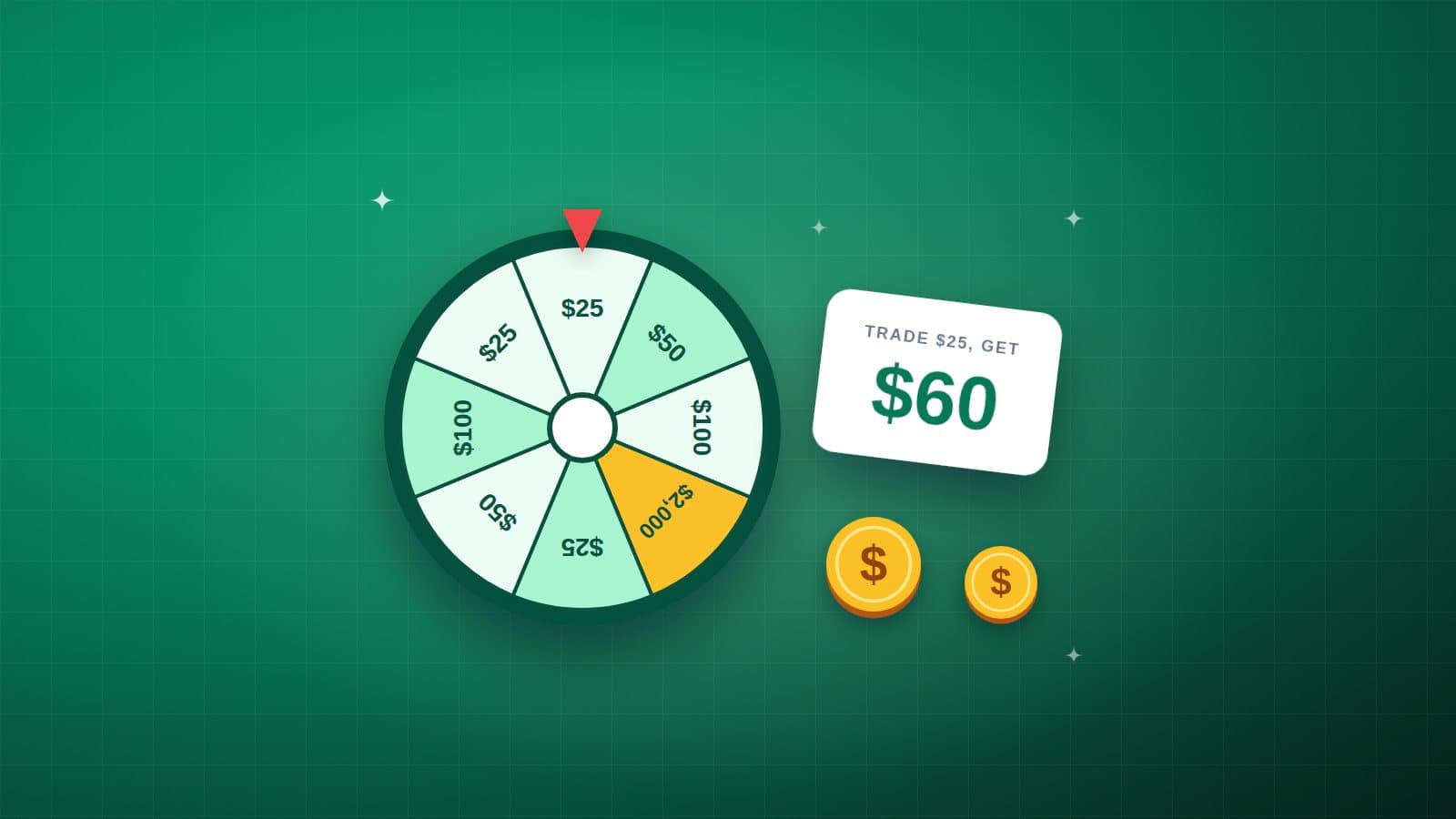
Polymarket makes money mainly from trading fees. When your order fills against someone else's resting order, Polymarket charges you a small fee. It earns that fee whether your shares end up worth $1 or $0, because Polymarket is an exchange: the other side of every trade is another trader, not Polymarket.
For most of its history Polymarket charged almost nothing and lived on venture money. That changed in 2026, when it rolled out fees across most of its markets.
Fee structures as published in October 2026. Polymarket changes rates by category; check its fee page before you trade.
Polymarket's business model at a glance
| Revenue source | How it works |
|---|---|
| Taker fees (global site) | A category rate × shares × price × (1 − price), paid by the side that takes liquidity |
| Polymarket US | Fees on its CFTC-regulated US exchange, on their own schedule |
| Market data | ICE, the owner of the New York Stock Exchange, distributes Polymarket's data to financial firms |
| Distribution deals | News and finance sites show Polymarket odds, which brings traders and data customers |
And on the other side of the ledger, what Polymarket pays out to grow volume: maker rebates, liquidity rewards for market makers, and holding rewards on some long-dated markets.
How Polymarket's fees work
Polymarket switched fees on in stages: first on short-term crypto markets in January 2026, then on selected sports markets in February, and on most categories from 30 March 2026. The formula is the same everywhere:
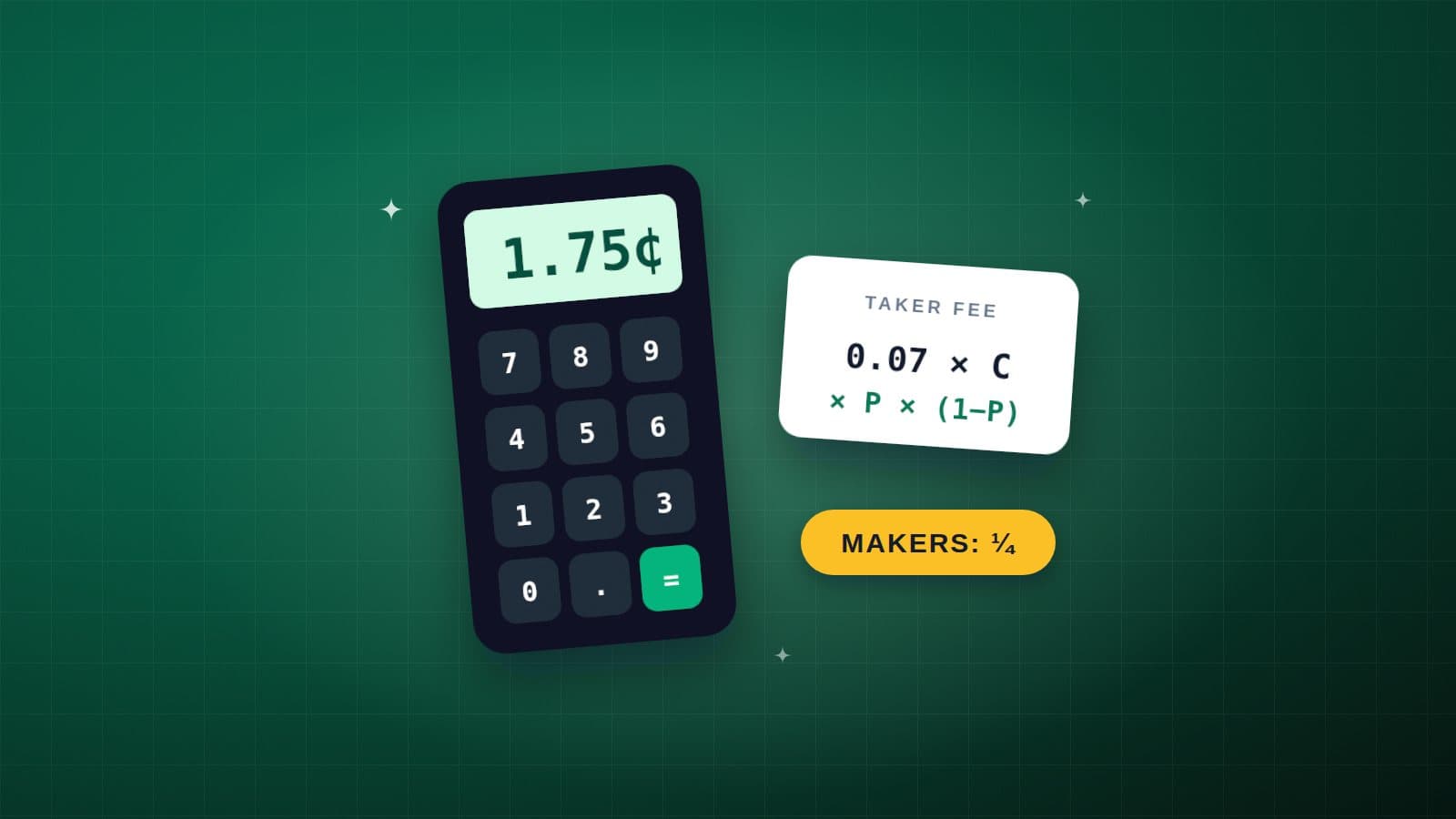
fee = category rate × shares × p × (1 − p)
p is the price in dollars, so a 40¢ share is 0.40. The term p × (1 − p) is largest at 50¢ and shrinks toward 1¢ and 99¢, which means you pay the most on coin-flip markets and very little on near-certain ones.
| You buy 100 shares at | Rate 4% (politics, finance, tech) | Rate 5% (sports, economics, culture) | Rate 7% (crypto) | Geopolitics |
|---|---|---|---|---|
| 10¢ | $0.36 | $0.45 | $0.63 | $0 |
| 50¢ | $1.00 | $1.25 | $1.75 | $0 |
| 90¢ | $0.36 | $0.45 | $0.63 | $0 |
These are the published category rates as of October 2026. Each market carries its own rate, so some differ from their category (a number of sports markets were at 3%), and rates change; check the market before you trade. Geopolitics and world-events markets have stayed free on the global site.
Why makers pay nothing
Polymarket charges only the taker, the order that fills immediately against the book. A maker, who posts a limit order that waits for someone else, pays no fee and receives a rebate funded from taker fees. The reason is liquidity: an exchange lives or dies on tight prices, and paying the people who quote those prices keeps spreads narrow. That is also why posting limit orders is the cheapest way to trade on Polymarket: limit order vs market order.
Does Polymarket make money when you lose?
No. When you buy "Yes" at 40¢, another trader sells it to you or buys "No" at 60¢. At settlement the winning side's shares pay $1 and the losing side's pay nothing: money moves between traders, and Polymarket has already taken its fee from the taker. A sportsbook works the other way round: it sets the odds, takes your stake and keeps it if you lose.
The incentive that follows is the usual one for an exchange. Polymarket wants more trading, so it lists thousands of markets, pays market makers and pushes into high-volume categories such as sports and crypto.
Polymarket US
In July 2025 Polymarket bought QCEX, a CFTC-licensed exchange and clearinghouse, to come back to the United States legally. The CFTC approved its intermediated US platform in November 2025 and the app began rolling out in December. Polymarket US runs in dollars, has its own fee schedule and lists a narrower set of markets than the global site. Where it is available and what it allows: how to use Polymarket in the US.
Data: the ICE deal
In October 2025 Intercontinental Exchange (ICE) agreed to invest up to $2 billion in Polymarket and to become a global distributor of its data, packaging prediction-market prices as sentiment indicators for banks and funds. Data is a smaller revenue line than fees for now, but it is the part of the business that does not depend on how many people trade on any given day.
The new plumbing: pUSD
In April 2026 Polymarket announced an overhaul of its exchange and a new collateral token, pUSD, backed one-to-one by USDC, to replace the bridged USDC.e that the global site used before. For traders it mostly means one approval in the web app; bots and API users had to move to the new order book. It is infrastructure rather than a revenue line, but it gives Polymarket more control over how money moves through its exchange. More on how the platform works underneath: how does Polymarket work.
What Polymarket pays out
- Maker rebates: a share of taker fees returned to liquidity providers.
- Liquidity rewards: daily rewards for keeping two-sided quotes close to the midpoint.
- Holding rewards: a variable annualised rate (3.25% at the time of writing) on positions in selected long-dated markets, such as the 2028 presidential election, so that money parked for years is not dead money.
How each program pays, with worked examples: Polymarket rewards explained.
These are costs for Polymarket, paid to make markets deeper and more active.
How much money does Polymarket make?
Polymarket is private and does not publish its accounts. Public trackers that add up fees paid on its exchange put fee revenue in the low hundreds of millions of dollars a year after the 2026 rollout; some analysts' estimates run far higher. Treat any single figure as an estimate. What is public is its valuation: about $9 billion after the ICE deal, with later funding talk at higher numbers. More on the company: who owns Polymarket and Kalshi stock and Polymarket stock.
Polymarket vs Kalshi: two exchange models
| Polymarket | Kalshi | |
|---|---|---|
| Main revenue | Taker fees (since 2026) | Taker and maker fees |
| Fee formula | Category rate × p × (1 − p) | 7% × p × (1 − p) for takers |
| Makers | Free, plus rebates | A quarter of the taker rate where maker fees apply |
| Free markets | Geopolitics and world events (global site) | None by default |
| Other income | Data via ICE | Volume from brokers such as Robinhood, data deals |
| Bets against users? | No | No |
Kalshi's side of the story in detail: how does Kalshi make money. Fee-by-fee comparison with worked examples: Polymarket fees vs Kalshi fees.
How does Polymarket make money: frequently asked questions
Does Polymarket charge fees?
Yes, since 2026, on most categories of its global site: takers pay a category rate × price × (1 − price). Makers pay nothing, and geopolitics and world-events markets are free.
Does Polymarket profit when I lose a bet?
No. Your loss is another trader's gain; Polymarket's income is the fee on the trade.
Is Polymarket profitable?
It does not publish financials. Fee revenue grew sharply after the 2026 rollout, but the company also spends heavily on rewards, rebates and expansion.
Why did Polymarket wait so long to charge fees?
Zero fees helped it win volume and liquidity while it was funded by venture capital. Once it was the biggest venue, it introduced fees in stages, starting with the busiest short-term markets.