Kalshi vs Polymarket (2026): fees, legality, markets and which one to use
The two biggest prediction markets compared side by side: who regulates them, where you can use them, what they charge, which markets they list and how their prices differ.
In this article
Kalshi and Polymarket are the two largest prediction markets in the world, and in 2026 they look more alike than ever: both now run CFTC-regulated exchanges for US users, both list thousands of markets on politics, sports, economics and culture, and both charge fees that depend on the price you trade at. The differences that remain are about how you pay, where you live, what you want to trade and how much each trade costs.
This guide compares them point by point. If you are new to prediction markets, start with how prediction markets work and come back.
Kalshi vs Polymarket at a glance
| Kalshi | Polymarket | |
|---|---|---|
| Founded | 2018 | 2020 |
| US regulator | CFTC (designated contract market since 2020) | CFTC, for the Polymarket US exchange launched in December 2025 |
| Who can use it | US residents 18+, with ID checks | Polymarket US: US residents 18+, with ID checks. Global site: most countries outside the US |
| Money | US dollars (bank transfer, debit card, some crypto deposits) | Polymarket US: US dollars. Global site: pUSD, Polymarket's dollar token backed 1:1 by USDC |
| Fees | Taker fee of 7% × price × (1 − price) per contract; lower maker fees | Global site: taker fee by category, same price curve; US exchange has its own schedule |
| Strongest markets | Sports, US economics, weather, US politics, combos | Politics, world events, crypto, culture, sports |
Fee and legal details change often. Figures here are as of October 2026; always check each platform's own fee and eligibility pages.
Regulation and legality
Kalshi has been a CFTC-regulated exchange since 2020, which is why it was the first prediction market most Americans could use legally. Its sports contracts are the exception that gets the headlines: several states argue they are unlicensed sports betting, and the courts are split. We cover the state picture in is Kalshi legal in your state.
Polymarket started as a crypto-native global exchange and blocked US users after a 2022 settlement with the CFTC. It came back to the US by acquiring a CFTC-licensed exchange and launched Polymarket US in December 2025. The global site is still closed to US residents. Details in is Polymarket legal in the US.
Bottom line: if you are in the US, both are legal at the federal level, and your state is what decides the rest.
Fees
Both platforms now charge fees shaped by the same curve: the fee per contract is a rate × price × (1 − price), so it is highest around 50¢ and shrinks toward 1¢ or 99¢.
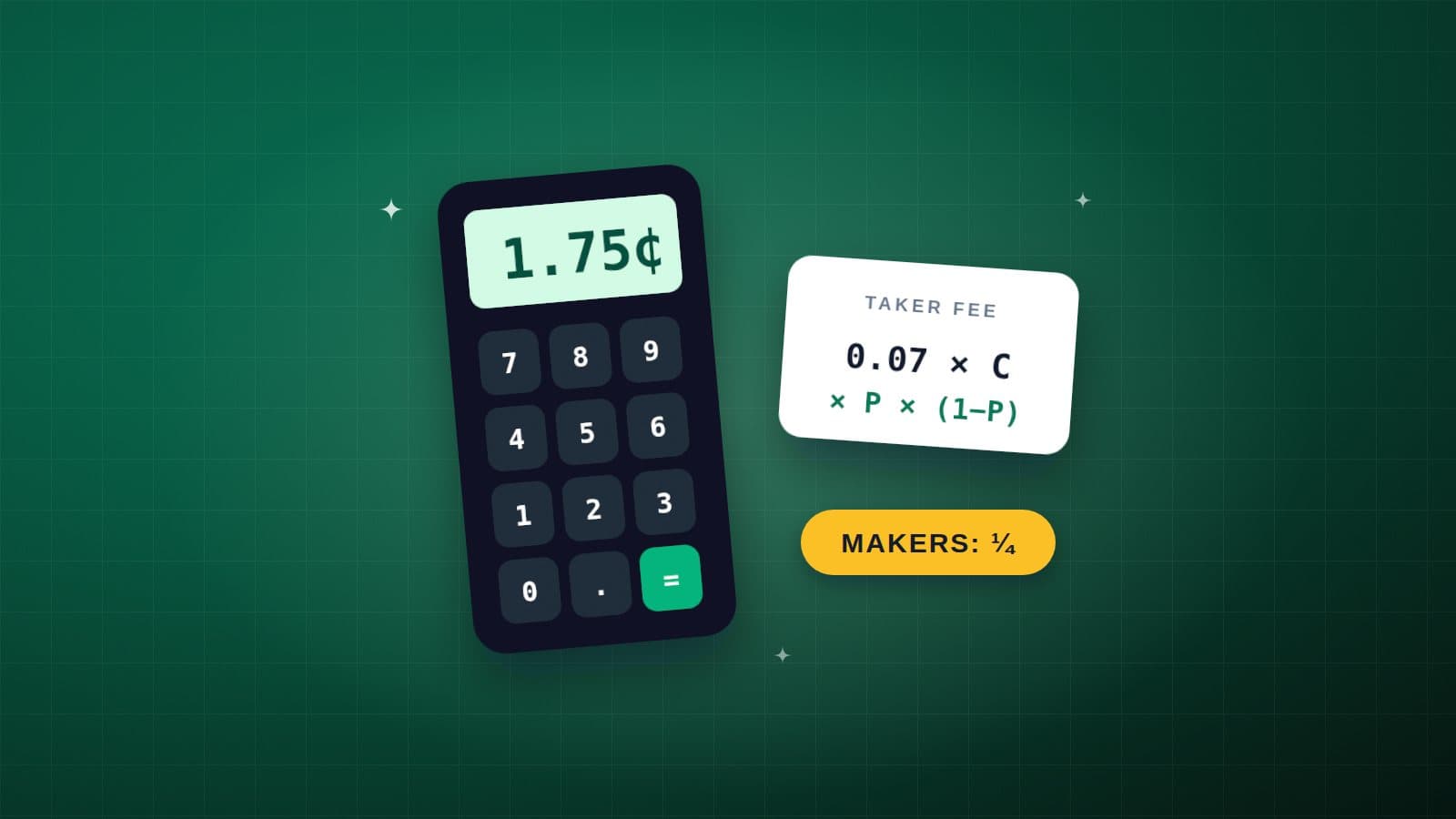
- Kalshi: takers pay 7% × P × (1 − P), rounded up to the cent. At 50¢ that is 1.75¢ per contract. Resting (maker) orders pay a quarter of that on markets where maker fees apply.
- Polymarket (global): takers pay a category rate × P × (1 − P). Crypto has the highest rate, geopolitics and world-events markets are free, makers pay nothing and earn rebates.
- Polymarket US: since 19 October 2026, takers pay 0.0695 × P × (1 − P), almost exactly Kalshi's rate, and makers pay nothing (Polymarket fees explained).
For a worked example with real numbers, read Polymarket fees vs Kalshi fees.
Markets: what you can trade
Kalshi is strongest where official data decides the outcome: Fed decisions, CPI, jobs reports, weather, plus a huge sports book and multi-leg "combos" (parlays). Polymarket is the deeper venue for elections worldwide, geopolitics, crypto prices and pop culture, and it is often where a new topic gets a market first.
The overlap is large: the same election, Fed meeting or championship is usually listed on both. You can browse both side by side on our live markets page, follow the 2026 midterm odds race by race, and see what closes this week on the resolution calendar.
Prices: the same question, two prices
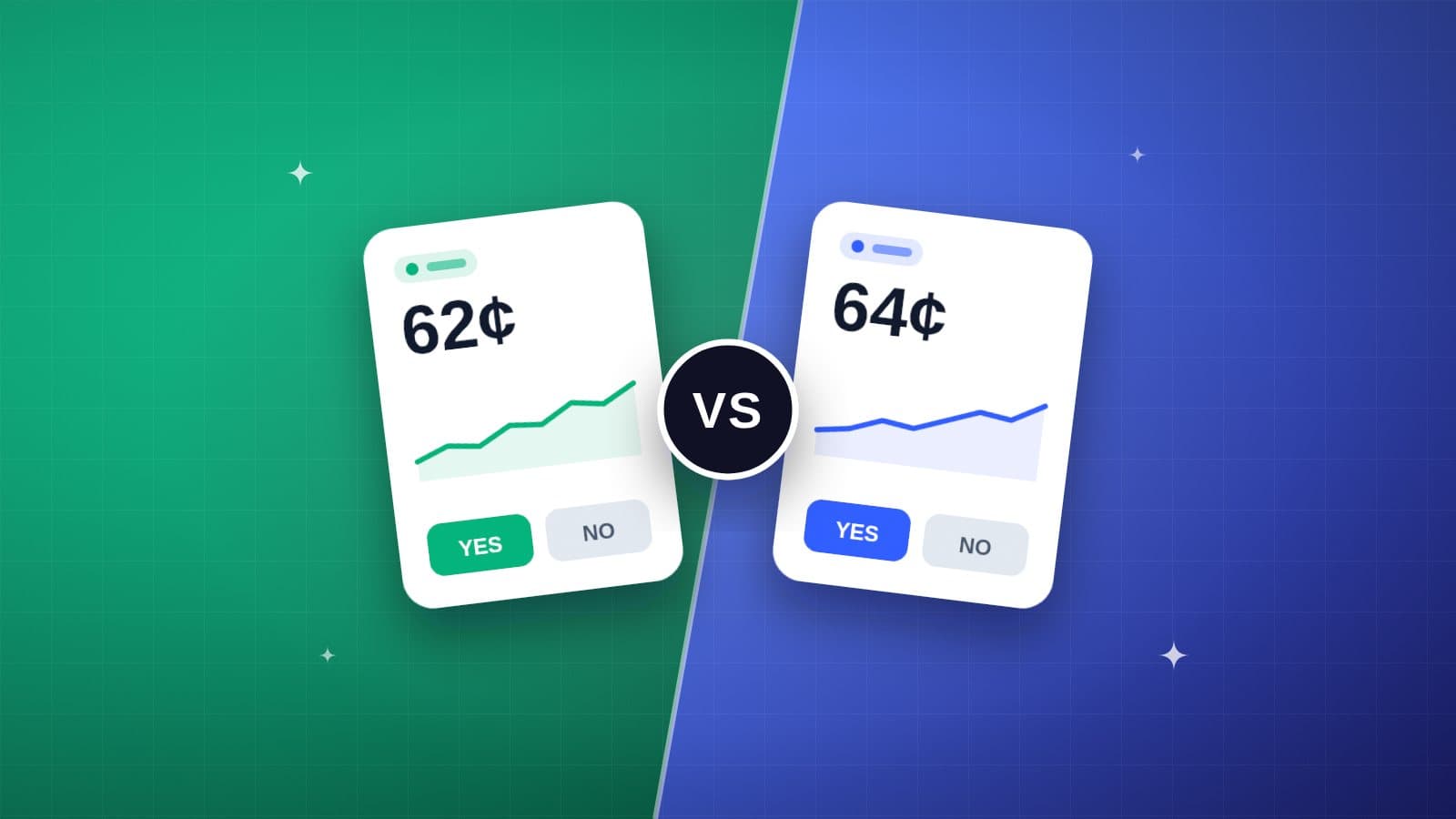
Because the two order books are separate, the same outcome often trades at slightly different prices: 62% on one platform and 58% on the other is common. That gap tells you where buying "Yes" is cheaper. Whether it is enough to profit after fees is another matter, explained in prediction market arbitrage.
Our spread scanner prices every pair listed on both platforms at the best ask, after fees, and our Compare page lines up mid prices with a fee calculator (free account).
Deposits, withdrawals and payouts
A winning contract pays $1 on both platforms, so what changes is how money moves:
- Kalshi: dollars in and out via bank transfer (ACH) or debit card; winnings settle to your balance when the market resolves.
- Polymarket US: dollar deposits and withdrawals through the app.
- Polymarket global: you deposit USDC, which is held as pUSD, Polymarket's dollar token on the Polygon network (backed one-to-one by USDC since April 2026), and you withdraw back to USDC. You need a crypto wallet or an exchange to move money in and out.
Timing, minimums and fees for each method are in Kalshi and Polymarket withdrawals.
Which one should you use?
- Check where you can legally trade. That rules out options faster than anything else.
- Decide how you want to pay. Dollars only: Kalshi or Polymarket US. Comfortable with stablecoins and outside the US: the global Polymarket site.
- Pick by market. Economics, weather and US sports lean Kalshi; elections worldwide, geopolitics and crypto lean Polymarket.
- Compare the price on the market you want. The same event can be several points cheaper on one side.
Many active traders keep accounts on both and trade wherever the price is better.
Kalshi vs Polymarket: frequently asked questions
Why was Kalshi legal before Polymarket?
Kalshi applied to the CFTC and became a regulated exchange in 2020. Polymarket launched as an unregistered crypto exchange, settled with the CFTC in 2022 and only returned to the US in December 2025 through a licensed exchange it acquired.
Which is bigger, Kalshi or Polymarket?
They trade places depending on the measure and the month. Kalshi's volume is driven by sports and combos; Polymarket leads on elections, world events and crypto. Both handle billions of dollars of trading volume.
Does Kalshi or Polymarket have higher fees?
It depends on the market. Kalshi charges takers 7% × price × (1 − price); Polymarket's global site uses the same shape with a rate per category, free on world events. See the full fee comparison.
Can I use both?
Yes, and many traders do, buying wherever the price is better. Prices for the same event often differ by a few points.
Do they pay out the same way?
Yes. A winning contract or share pays $1 on both; the difference is whether you are paid in dollars (Kalshi, Polymarket US) or in pUSD, Polymarket's USDC-backed token (global Polymarket).
Keep reading
- 2026 midterm election odds, live
- Prediction market apps compared
- Who owns Kalshi?
- Who owns Polymarket?
- Is Kalshi legit? An honest review
- How does Kalshi work?
- How does Polymarket work, and how does it make money?
- Can you parlay on Kalshi or Polymarket?
- How to use Polymarket in the US
- Polymarket alternatives
- The best prediction markets in 2026, ranked