How does Kalshi work? Contracts, payouts and fees explained
What a Kalshi contract is, how prices become probabilities, how a $1 payout works, what the fees are and how Kalshi makes money, with worked examples.
In this article
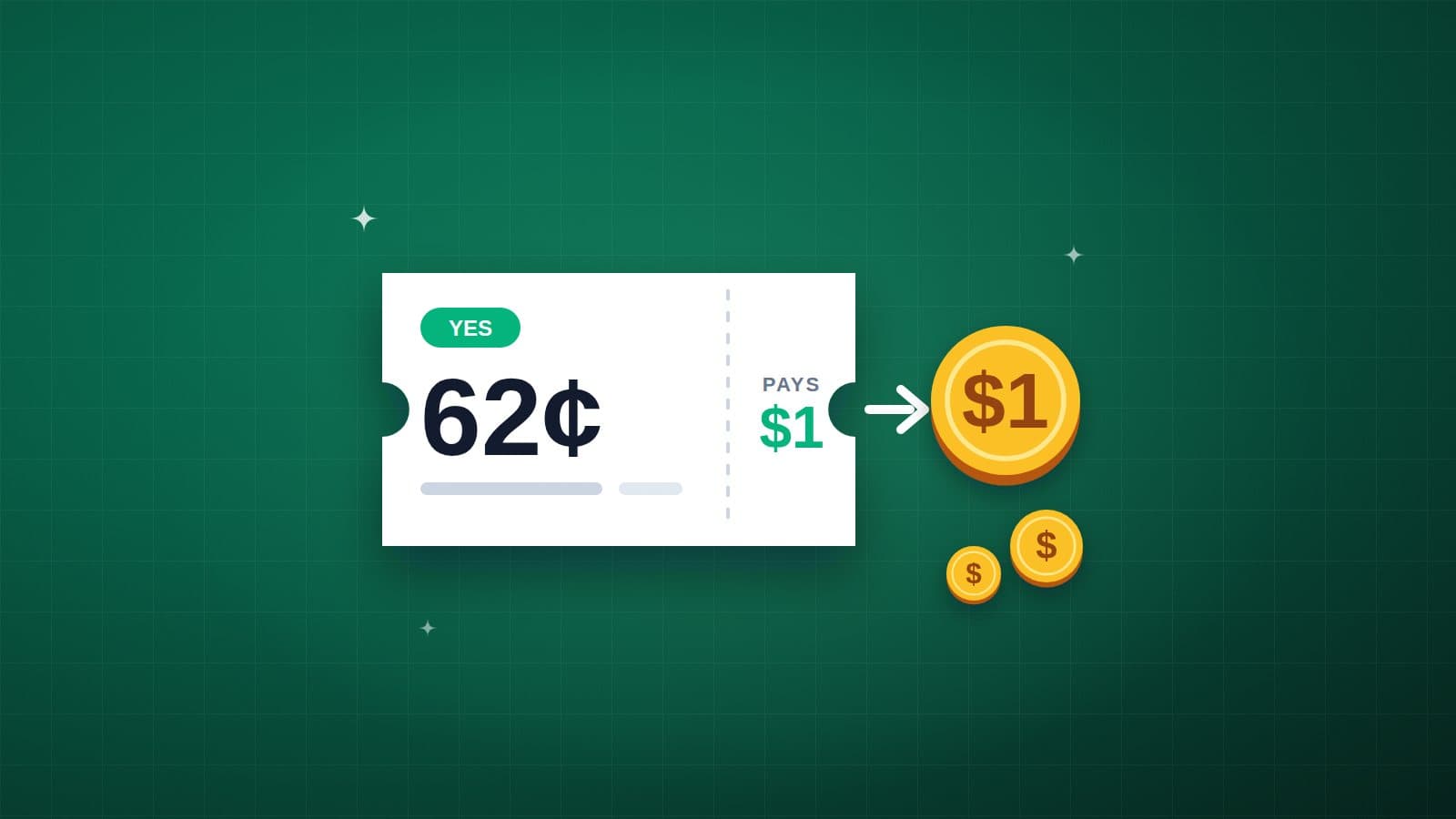
Kalshi is an exchange where you trade event contracts: yes-or-no questions about the future, like "Will the Fed cut rates in December?" or "Will it rain in New York tomorrow?". Each contract pays $1 if the answer is yes and $0 if it is no, so its price, between 1¢ and 99¢, reads as the market's probability.
The basics in four steps
- Pick a market and an outcome, for example "Yes" on a rate cut trading at 62¢.
- Buy contracts. 100 contracts at 62¢ cost $62 (plus a fee).
- Hold or sell. The price moves as news comes in. You can sell any time before the market closes. If it rises to 80¢, selling locks in an 18¢ gain per contract.
- Settlement. When the outcome is known, winning contracts pay $1 each and losing ones $0. Your 100 "Yes" contracts pay $100 if the cut happens.
Every "Yes" has a matching "No": a "No" at 38¢ pays $1 if the cut does not happen. That is why Yes + No prices add up to about $1.
How Kalshi payouts work
- Win: each contract pays $1. Profit = $1 − what you paid − fees.
- Lose: each contract pays $0. You lose what you paid.
- Sell early: you get the current bid price, whatever happened so far.
Payouts land in your Kalshi balance as soon as the market settles, usually within hours of the official result. From there you can withdraw to your bank.
Reading the price as a probability
A price of 62¢ means traders, in aggregate, put about a 62% chance on "Yes". If you think the real chance is higher, buying is a positive bet in expectation; if lower, buy "No". That is the whole game: comparing your probability with the market's. More on reading odds in how prediction markets work.
Fees and how Kalshi makes money
Kalshi earns money from trading fees, not from users losing. Takers (orders that fill immediately) pay:
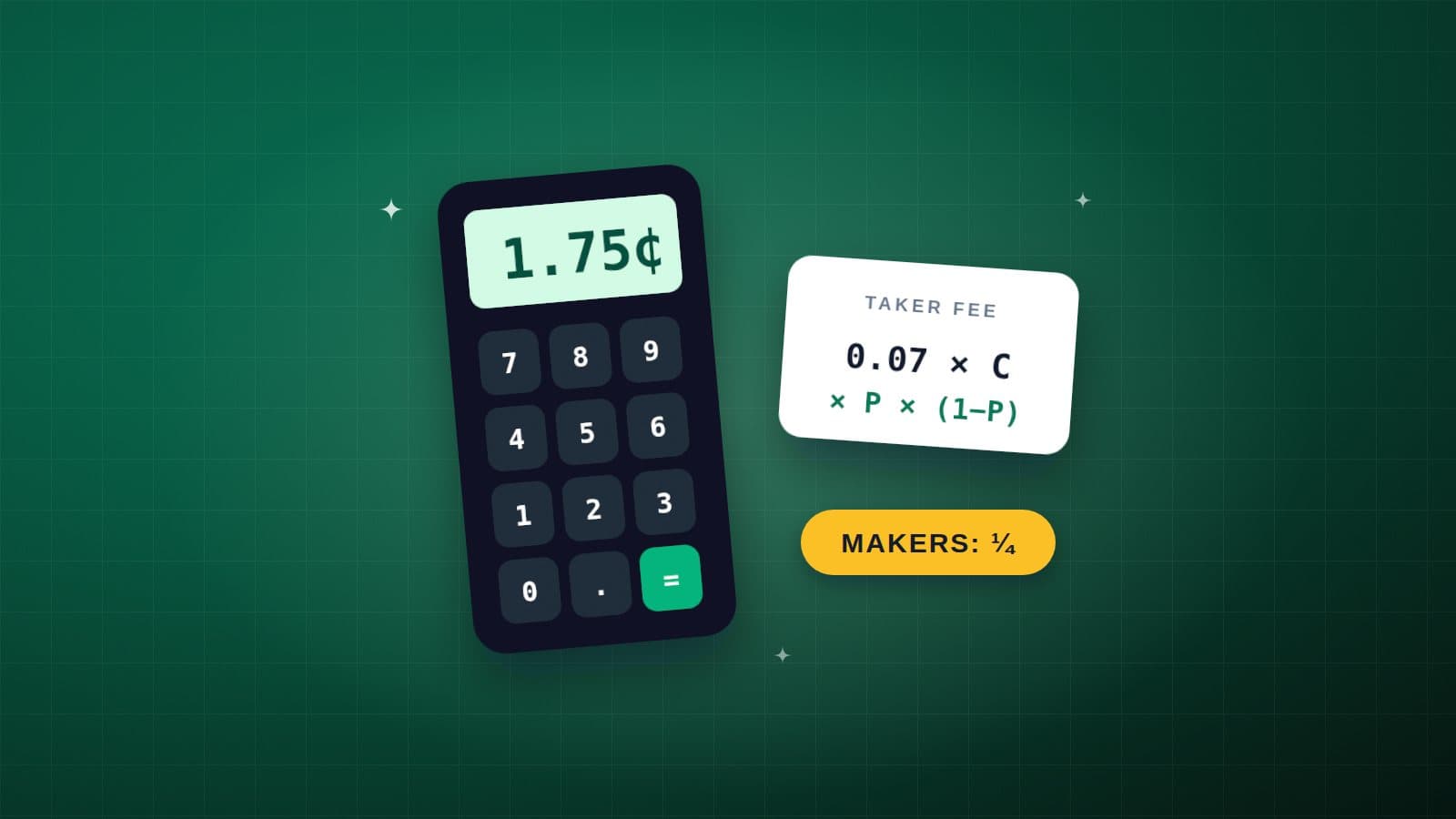
fee = 7% × contracts × price × (1 − price), rounded up to the next cent.
| Price | Fee per contract | Fee on 100 contracts |
|---|---|---|
| 10¢ | 0.63¢ | $0.63 |
| 50¢ | 1.75¢ | $1.75 |
| 90¢ | 0.63¢ | $0.63 |
Resting limit orders (makers) pay a quarter of the taker rate on markets where maker fees apply, and nothing when the order is cancelled. Full comparison in Polymarket fees vs Kalshi fees.
What you can trade on Kalshi
- Economics: Fed decisions, CPI, jobs, GDP, gas prices
- Politics: elections, approval ratings, government shutdowns
- Sports: game winners, totals, season futures and multi-leg combos (parlays explained)
- Weather and climate: daily highs, hurricanes, snowfall
- Culture and tech: awards, box office, AI releases
Who can use Kalshi
You need to be 18 or older, a US resident (Kalshi also accepts some other countries), and pass identity verification. Sports contracts may be limited in some states while court cases play out: see is Kalshi legal in your state. Wondering about safety? Read is Kalshi legit.
How Kalshi works: frequently asked questions
How does the Kalshi payout work?
Each winning contract pays $1 into your balance when the market settles; each losing contract pays $0. Your profit is $1 minus what you paid and the fee.
Can I sell before the event happens?
Yes. You can sell at the current bid any time the market is open, to take a profit or cut a loss.
What does slippage mean on Kalshi?
It is the difference between the price you expected and the price you got, which happens when a market order eats through several price levels in a thin order book. Limit orders avoid it. Worked example: slippage, volume and spread explained.
How old do you have to be to use Kalshi?
18, with identity verification.
How does Kalshi make money?
From trading fees on each contract, not from users' losses. You always trade against another user.
Keep reading
- What does slippage mean on Kalshi?
- Kalshi taxes
- Kalshi API and Polymarket API
- How Kalshi payouts work
- Kalshi perpetual futures (perps)
- Is Kalshi down? Maintenance and outages
- Kalshi vs Polymarket: which one to use
- How does Polymarket work?
- See which Kalshi markets close this week on the resolution calendar
- How to read Kalshi odds and Polymarket prices
- Kalshi app review